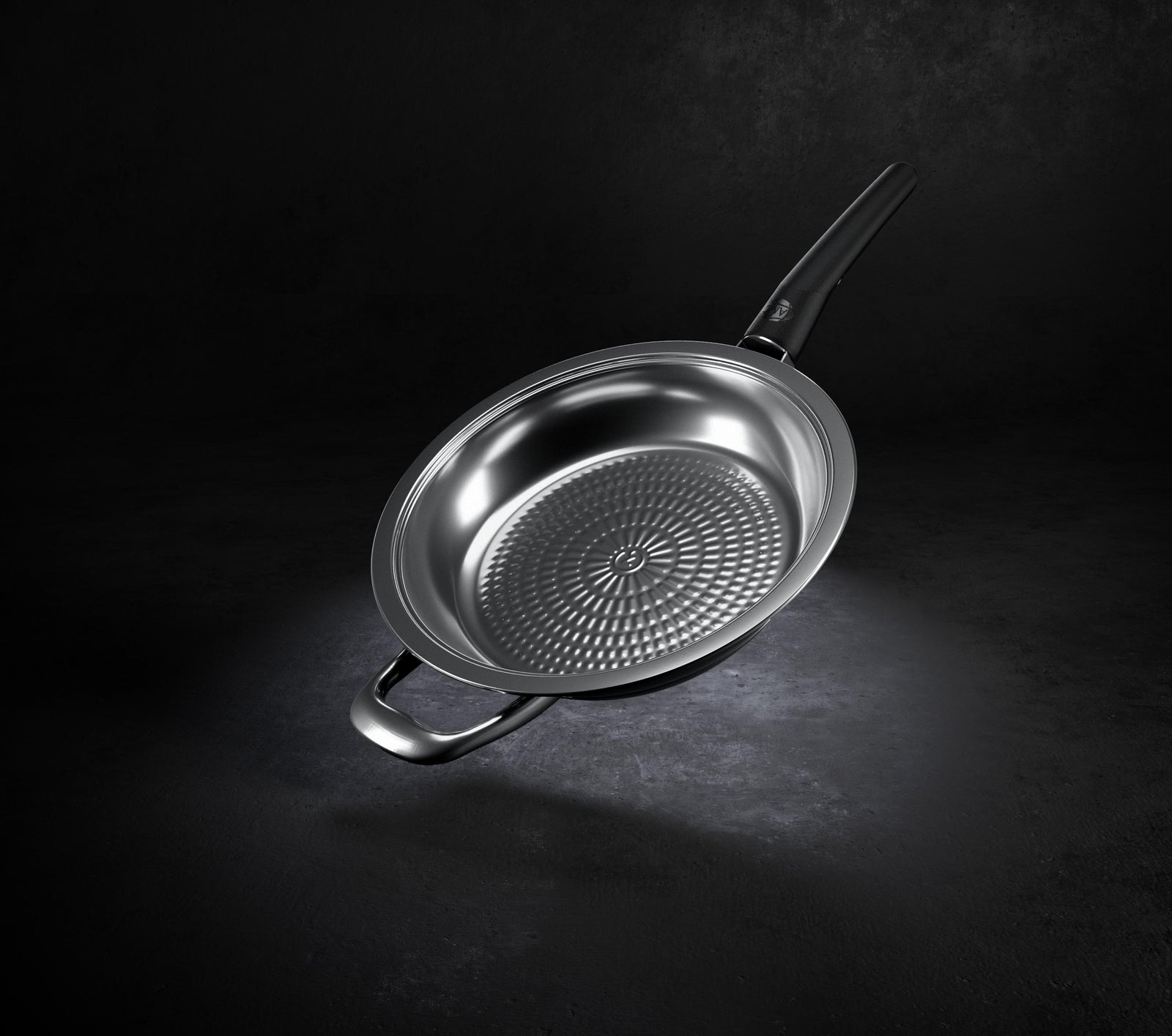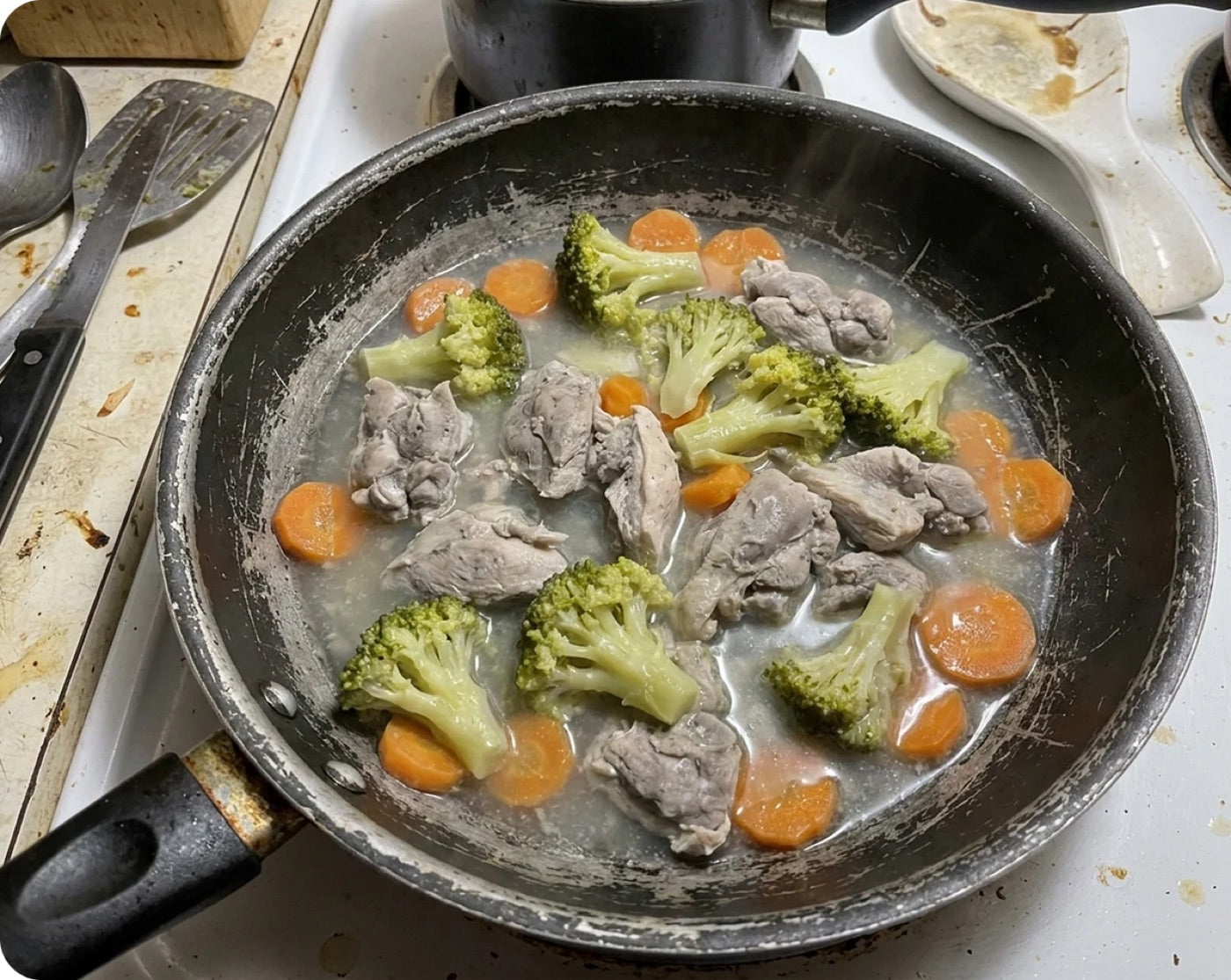
Coated pan
- Applied coating forms the cooking surface
- Some coatings use PTFE, a fluoropolymer
- Temperature and care instructions depend on the coating
The AMC guide to uncoated cooking
What touches your food matters. Discover the difference between coated cookware and uncoated stainless steel — and how thoughtful temperature control elevates everyday cooking.
The essentials, at a glance
It starts with the cooking surface. Then comes the technology that helps you use it well.
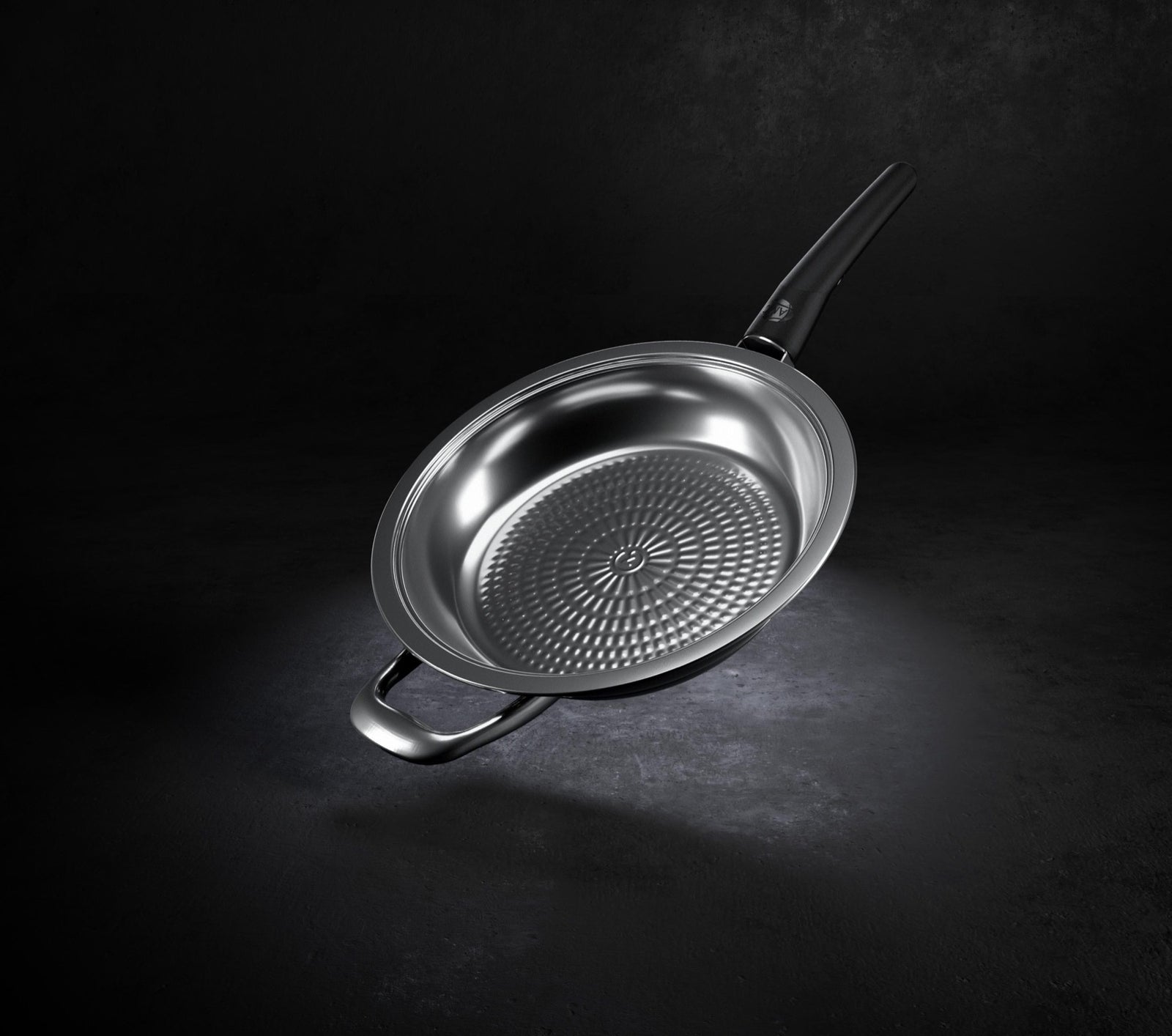
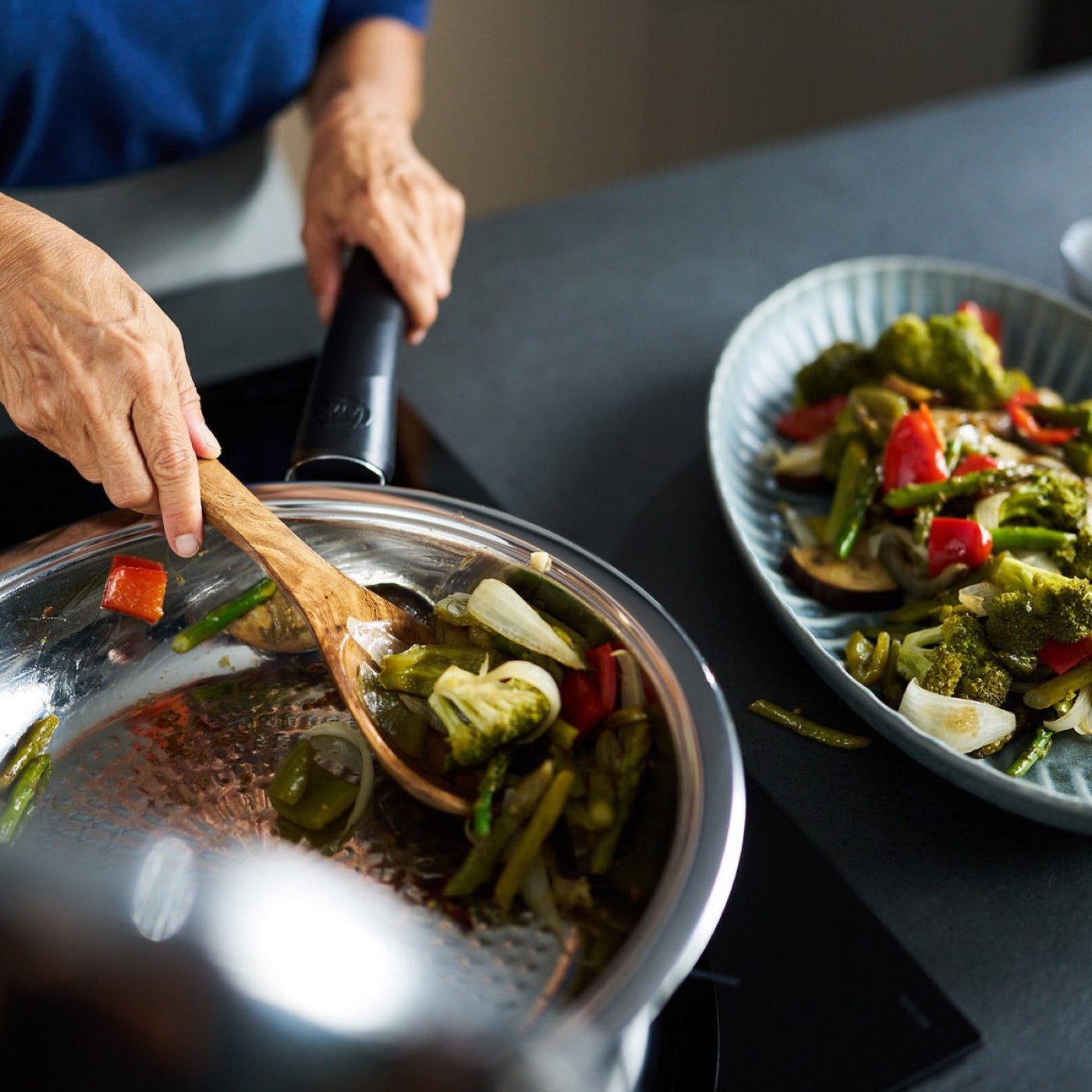
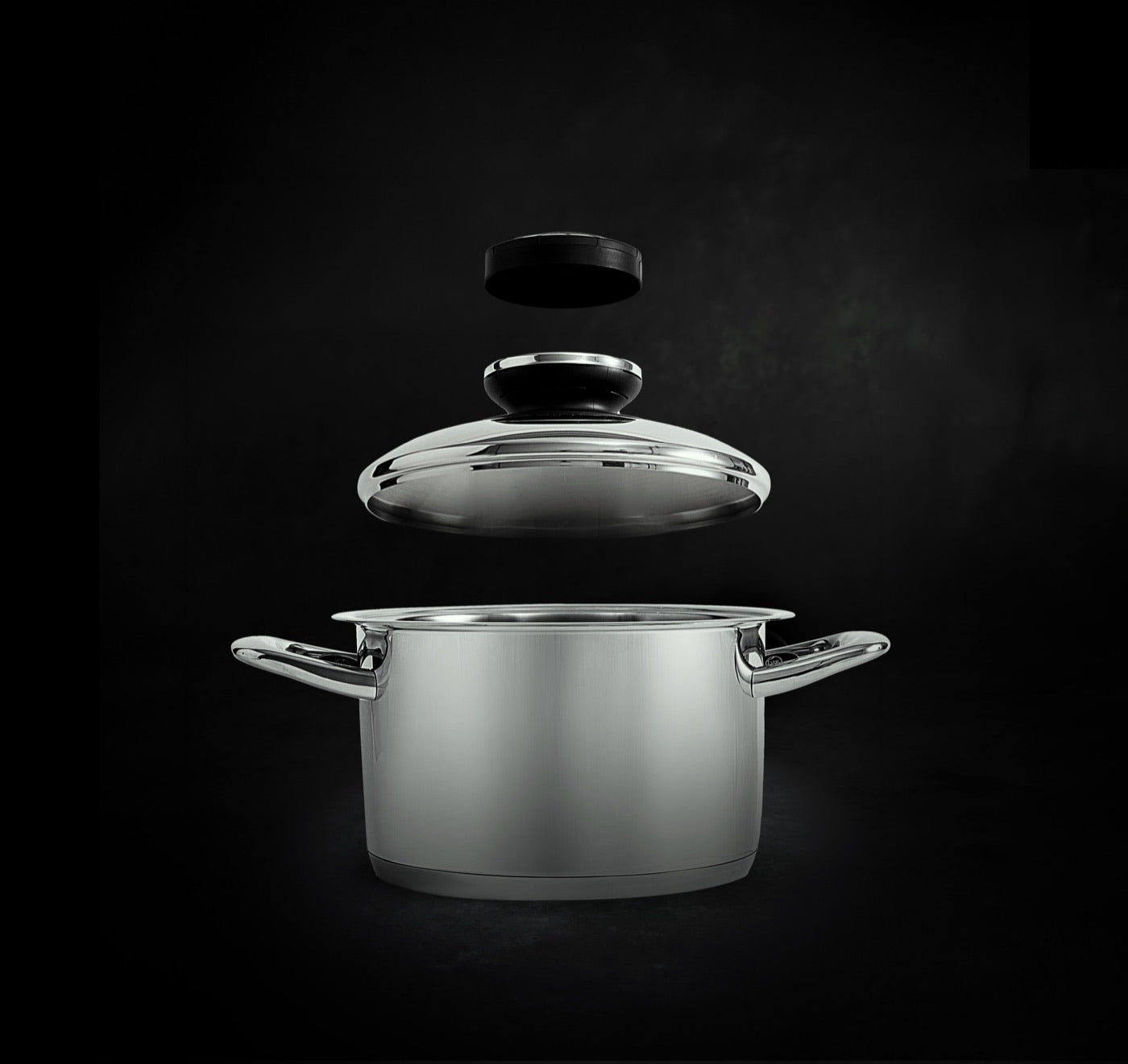
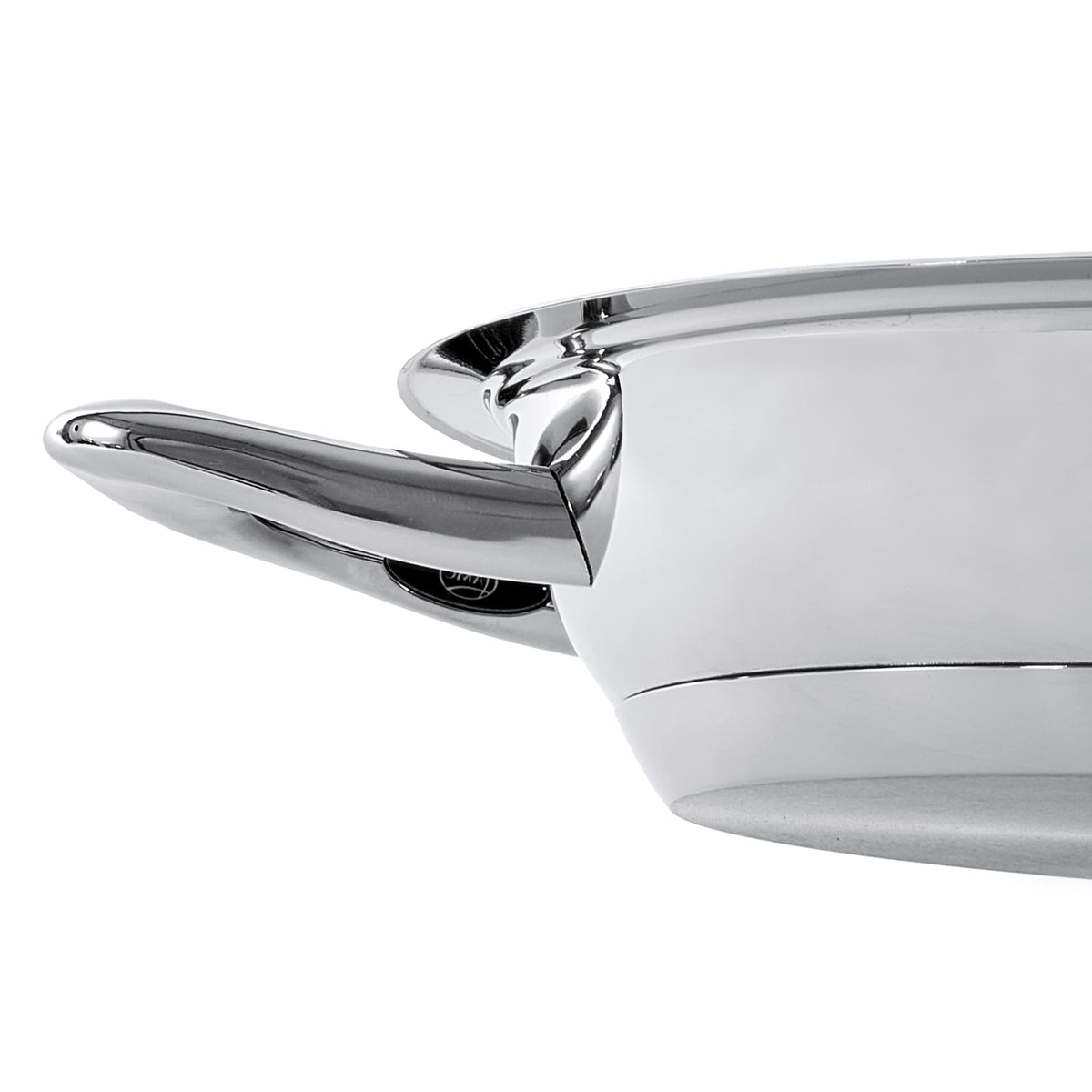
With uncoated stainless steel, the metal itself is the cooking surface — no synthetic non-stick layer in between.
18/10 stainless steel combines corrosion resistance with a durable, practical cooking surface.
Well-managed temperature helps deliver browning, consistent results and easier cooking.
01 · Understand the surface
Two pots and pans can look similar from the outside. The important difference is the surface your ingredients meet.
PFAS is a broad group of substances. Coating materials and regulatory definitions vary by product and market. The relevant question is which material forms the actual food-contact surface.
02 · Made for everyday cooking
Not all stainless steel is identical. AMC's stainless steel cookware components use 18/10 stainless steel — a material selected for its corrosion resistance, durability and suitability for food contact.
These numbers describe the approximate proportions of chromium and nickel in the steel. The cooking surface remains uncoated.
Why it matters
There is no applied PTFE non-stick layer between the pan and the food.
High heat creates rich roasted aromas and an appetizing golden-brown finish.
Robust construction supports years of cooking with appropriate care.
Suited to everyday dishes, from vegetables to pan sauces and high-heat cooking.
03 · The intelligent cooking system
Durable stainless steel and intelligent technology work together to distribute heat evenly and give you greater control while cooking.
Foundation · 01
Engineered to absorb, distribute and retain heat. The base helps limit hot spots and supports consistent cooking on a range of hobs.
Visibility · 02
Visiotherm shows the temperature range inside the pot or pan, helping you know when a suitable cooking range has been reached.
Assistance · 03
Paired with Visiotherm, Audiotherm gives audible and visual signals to help you get the temperature and timing right.
04 · Cook smarter
Uncoated steel isn't naturally non-stick. Understanding how and when to use heat helps ingredients brown and release.
Wait until the pan reaches the cooking range appropriate for your recipe.
For suitable foods, natural release often follows proper roasting — avoid moving ingredients too early.
Use Visiotherm and Audiotherm guidance to manage heat and time, rather than guessing.
Explore more
Our articles take a closer look at individual questions.

Your questions, answered
Direct answers to the most common questions about uncoated cooking surfaces and stainless steel.
An uncoated stainless steel cooking surface does not require a PTFE/PFAS-based non-stick coating. Always check the specific product's materials and construction when evaluating product claims.
AMC cookware made from stainless steel does not use a synthetic PTFE/PFAS-based non-stick coating. The stainless steel itself forms the food-contact cooking surface.
PTFE is a fluoropolymer used in many conventional non-stick coatings. PFAS describes a broad class of fluorinated substances; the scope of regulatory definitions can differ by jurisdiction.
No. Stainless steel doesn't have the same non-stick properties as PTFE-coated cookware. Suitable cooking temperatures and allowing time for browning can help many foods release more easily.
Not on its own. A magnetic base can help indicate induction compatibility, but it cannot reliably establish the exact alloy or quality of the stainless steel food-contact surface.

See it · Taste it · Experience it
Experience AMC for yourself.
Discover how uncoated pots and pans and intelligent temperature control come together in a hands-on cooking experience.